


Delhi World Public School, Greater Noida
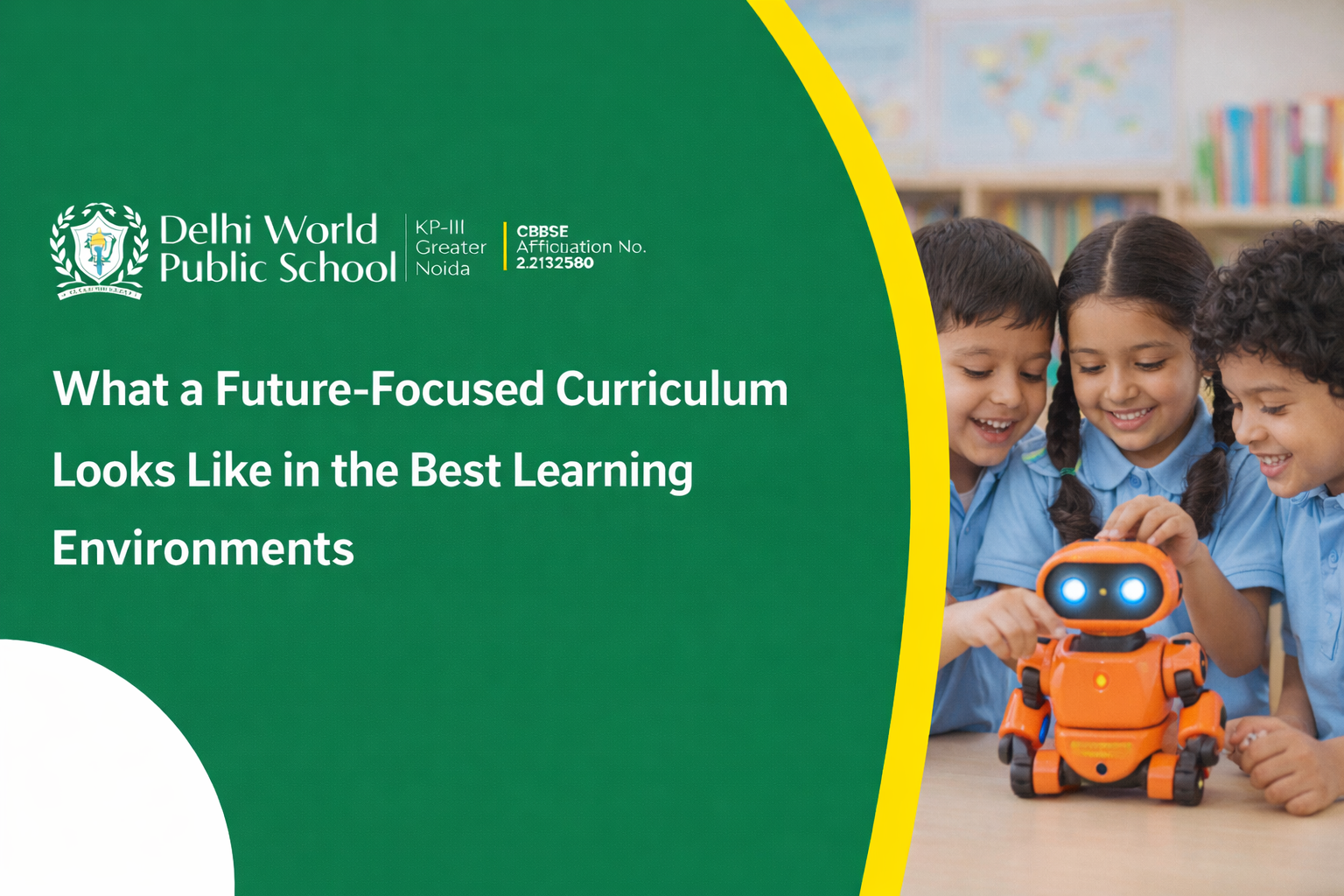
Education today stands at a powerful crossroads. Rapid technological advancement, changing career landscapes, and global interconnectedness have transformed what students need to learn and how they need to learn it. At Delhi World Public School, the Best School in Greater Noida where in this evolving context, a future-focused curriculum has become the defining feature of progressive education systems. The school is no longer identified only by academic results, but by how effectively it prepares students for life beyond classrooms.
A future-focused curriculum goes far beyond textbooks and examinations. It equips learners with adaptability, creativity, emotional intelligence, digital fluency, and ethical awareness — skills essential for success in a world that continues to change faster than ever before.
This article explores what truly defines a future-ready curriculum, the elements that distinguish the best learning environments, and why this approach is reshaping modern education.
Our educational philosophy centers on a future-focused curriculum that blends rigorous academics with real-world skills and creative exploration. We believe learning should be active, meaningful, and engaging, which is why we combine inquiry-based projects, digital literacy, collaborative problem-solving, and experiential learning at every stage of schooling. Beyond core subjects, students can explore clubs and activities such as aeromodelling, photography, oratory, creative arts, and science clubs that ignite curiosity and enrich learning. Events like science exhibitions, literature festivals, and technology showcases help students apply classroom knowledge to practical situations and build confidence. We also provide regular field trips and community engagement initiatives that nurture global awareness and social responsibility. Through this holistic approach, we cultivate learners who are not only academically proficient but also adaptable, innovative, and prepared for the challenges of tomorrow.
A future-focused curriculum is designed with a long-term vision. Instead of preparing students only for the next exam or grade level, it prepares them for lifelong learning, multiple career transitions, and global citizenship.
Such a curriculum emphasizes:
The school integrates these principles into daily learning, ensuring students are prepared not just academically, but socially, emotionally, and ethically.
Traditional education systems often prioritize content delivery and standardized testing. While subject knowledge remains important, future-focused learning environments recognize that information is readily available. What matters most is how students use knowledge.
Modern curricula focus on:
By shifting from teacher-centered instruction to learner-centered engagement, students become active participants in their own education.
One of the most defining aspects of future-ready education is skill development. Skills taught today determine adaptability tomorrow.
Key skills include:
In the school, academic subjects are often used as tools to develop these skills rather than being the end goal themselves.
Technology is no longer optional in education. However, future-focused learning environments use technology intentionally, not excessively.
Technology supports:
Digital tools help students become responsible digital citizens, capable of navigating online spaces ethically and effectively.
Future-focused curricula encourage students to ask questions, explore possibilities, and discover answers independently.
This is achieved through:
Learning becomes meaningful when students understand why something matters and how it applies to real life.
The future does not operate in isolated subjects. Real-world challenges require knowledge from multiple disciplines.
Future-ready curricula connect:
This interdisciplinary approach develops flexible thinkers who can connect ideas across domains.
Every child learns differently. A future-focused curriculum respects individuality and adapts to diverse learning styles, interests, and strengths.
The school ensures that students are supported, challenged, and encouraged at their own pace.
The ability to express ideas clearly and work effectively with others is essential for future success. Modern curricula embed communication and collaboration into daily learning.
Students regularly engage in:
These experiences build confidence, empathy, and leadership skills.
Creativity fuels innovation. A future-focused curriculum nurtures imagination by encouraging experimentation and original thinking.
Creativity is promoted through:
When creativity is valued, students learn that mistakes are part of growth, not something to fear.
Emotional intelligence is just as important as academic intelligence. Future-ready schools integrate social and emotional learning into everyday instruction.
This helps students:
Emotionally aware learners are better equipped to handle stress, collaborate effectively, and make ethical decisions.
A future-focused curriculum does not only prepare students for careers but also for responsible citizenship.
Core values emphasized include:
The school ensures that students grow into individuals who use their knowledge and skills for positive societal impact.
The future workforce is global. Students must be comfortable interacting with diverse cultures and perspectives.
Future-ready curricula include:
Such experiences broaden perspectives and foster open-mindedness.
Traditional exams often measure memory rather than understanding. Future-focused curricula use continuous assessment to track growth.
Assessment methods include:
This approach reduces pressure and provides a more accurate picture of student progress.
Many future jobs do not exist today. A future-focused curriculum prepares students for adaptability rather than specific roles.
Career readiness includes:
Students gain clarity about their strengths and interests while remaining flexible for future possibilities.
Teachers are facilitators, mentors, and guides in modern learning environments.
Their role includes:
Continuous professional development ensures educators remain aligned with evolving educational practices.
Future-focused education extends beyond textbooks and classrooms. Real-world exposure strengthens understanding.
Experiential learning includes:
These experiences connect learning with life.
Parents today seek schools that prepare children not just for exams, but for life. The school stands out because it:
This holistic approach reassures parents that their children are future-ready.
Students educated in progressive learning environments tend to:
These long-term outcomes highlight the true value of future-focused education.
While many schools offer strong academics, exceptional learning environments:
This distinction defines the school in today’s educational landscape.
A future-focused curriculum is not a trend — it is a necessity. As the world continues to evolve, students must be equipped with skills, values, and mindsets that enable them to thrive in uncertainty.
By emphasizing critical thinking, creativity, emotional intelligence, digital fluency, and ethical awareness, the school creates learners who are confident, adaptable, and ready for the future.
Education that looks ahead does more than prepare students for exams — it prepares them for life.
FAQs:


