


Delhi World Public School, Greater Noida
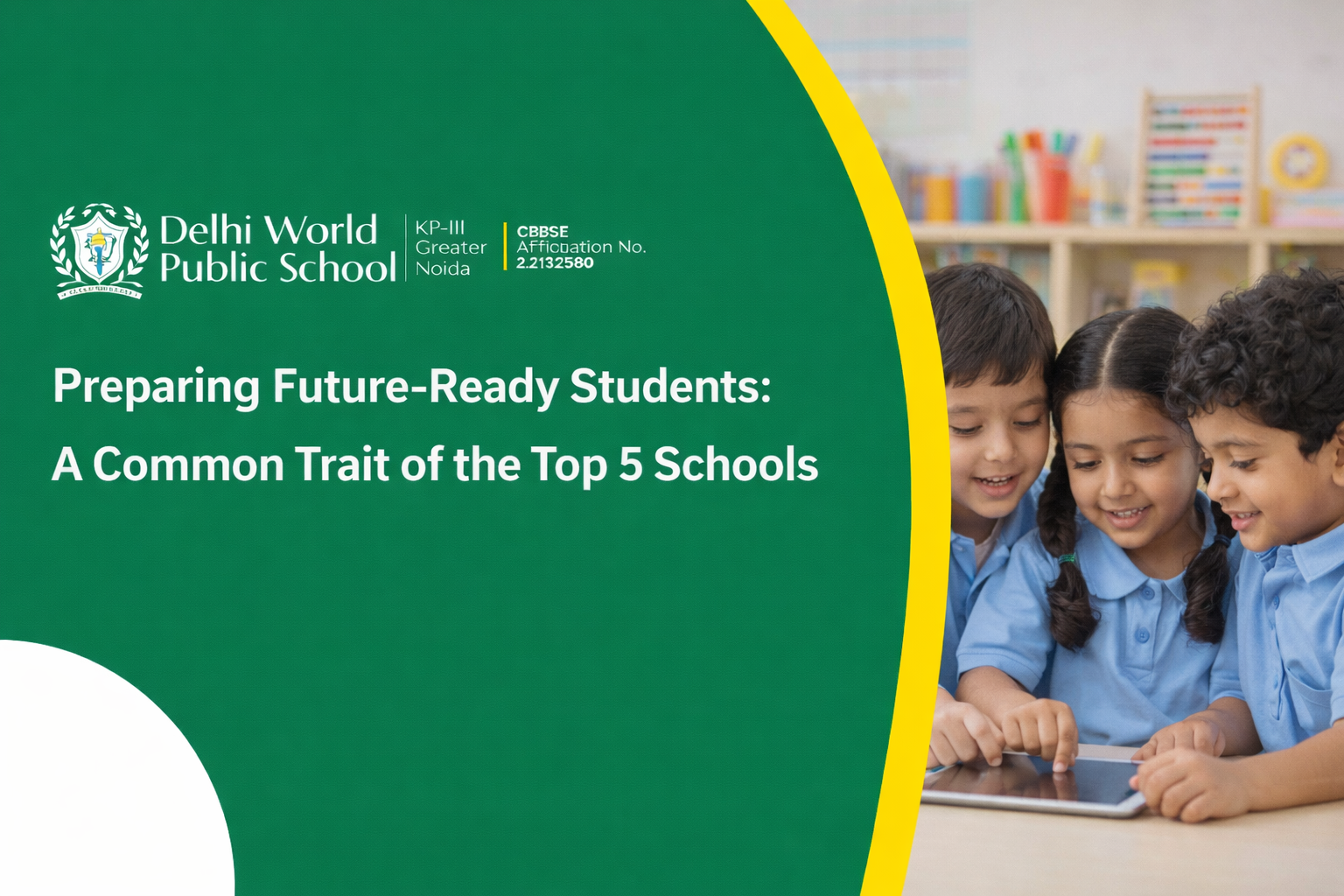
Introduction:
Education in the 21st century is no longer limited to textbooks, exams, and rote memorization. At Delhi World Public School, the Top 5 Schools in Greater Noida where as the world evolves at an unprecedented pace, schools must go beyond traditional teaching methods to prepare students for a future shaped by technology, innovation, and global connectivity. The most successful institutions share one defining quality — a clear focus on preparing students for the challenges and opportunities of tomorrow.
Across leading educational institutions, especially among the schools, there is a noticeable shift toward future-ready learning. These schools emphasize adaptability, critical thinking, emotional intelligence, and digital literacy, ensuring students are equipped not just for higher education but for life itself.
This article explores the common traits that set future-focused schools apart and how they create confident, capable learners ready to thrive in a rapidly changing world.
About Us:
We are committed to preparing students who are not only academically accomplished but also equipped with future-ready skills like critical thinking, collaboration, and creativity. Our learning environment blends strong scholastic foundations with diverse extracurricular platforms, including robotics, Model United Nations, arts, sports, and STEM clubs, giving every student a chance to discover their passion and develop leadership potential. Regular events — from inter-school competitions to innovation fairs and thematic workshops — nurture curiosity and real-world problem-solving. Our structured curriculum and active learning experiences aim to develop confident communicators, resilient thinkers, and empathetic leaders. We also celebrate cultural festivals and showcase achievements at annual functions that amplify student voices and talents. Through this blend of academic excellence and holistic engagement, we empower learners to embrace challenges, innovate, and confidently shape their future pathways.
Understanding What “Future-Ready” Truly Means
Being future-ready goes beyond scoring well in exams. It means developing skills, attitudes, and values that help students succeed in diverse environments and evolving careers. A future-ready student is someone who can think independently, adapt quickly, collaborate effectively, and use technology responsibly.
The schools consistently integrate these principles into everyday learning. Their focus is on shaping learners who are not only academically strong but also socially aware, emotionally balanced, and ethically grounded.
One of the most defining traits of future-ready schools is their emphasis on critical thinking. Instead of encouraging students to memorize information, these institutions promote questioning, analysis, and reasoning.
By learning how to think rather than what to think, students develop the ability to analyze situations, make informed decisions, and approach challenges with confidence — a skill highly valued in future careers.
Technology has become an inseparable part of modern life. Schools that aim to prepare students for the future embed digital tools into teaching and learning, rather than treating them as add-ons.
Among the schools, technology is used to enhance creativity, collaboration, and understanding, while also teaching students digital responsibility and cyber awareness.
Academic excellence alone is no longer enough. Future-ready schools nurture the whole child by balancing intellectual, emotional, social, and physical development.
This holistic approach helps students become confident individuals who can navigate social interactions, manage stress, and work effectively with others — skills essential in both personal and professional life.
Every child learns differently. Recognizing this, future-focused schools adopt personalized teaching strategies that cater to diverse learning styles, strengths, and interests.
Such personalization ensures that no child is left behind and that each learner can progress at their own pace, unlocking their full potential.
Clear communication is one of the most valuable skills in today’s globalized world. The schools actively foster communication abilities through structured and informal activities.
These experiences help students articulate ideas confidently, listen actively, and express themselves effectively across diverse platforms.
Innovation is driven by creativity. Future-ready schools create environments where imagination is encouraged, and students are free to experiment, explore, and innovate.
This creative freedom nurtures curiosity and helps students develop innovative solutions — a trait that sets future leaders apart.
While skills and knowledge are vital, values shape how students apply them. Leading schools focus on character development, integrity, and social responsibility.
By grounding students in strong values, schools ensure they grow into responsible citizens who contribute positively to society.
The future is global. Students must understand cultures, economies, and ideas beyond their immediate surroundings. Schools that prepare students for the future expose them to global perspectives early on.
Such exposure broadens horizons and prepares students to thrive in multicultural environments.
Academic success is deeply connected to emotional well-being. Future-ready schools prioritize mental health and emotional intelligence as part of daily learning.
Emotionally balanced students are more resilient, focused, and capable of handling challenges effectively.
Teachers are the backbone of any successful school. Institutions focused on future readiness invest in ongoing professional development to ensure educators stay updated with modern teaching practices.
Well-trained teachers create dynamic learning environments that inspire students to think beyond boundaries.
Future-ready schools bridge the gap between theory and practice. Learning extends beyond classrooms through real-world exposure and experiential activities.
Such experiences help students connect learning with real-life applications.
Career landscapes are constantly evolving. Schools that look ahead focus on building transferable skills rather than training students for specific jobs.
Students gain clarity about their interests and strengths, enabling informed academic and career choices.
Parents today seek institutions that offer more than academic results. The schools are trusted because they:
These qualities give parents confidence that their children are receiving an education aligned with future demands.
Students educated in future-focused environments are more likely to:
This long-term impact is what distinguishes truly exceptional schools.
Conclusion:
Preparing students for the future is no longer optional — it is essential. Schools that consistently rank among the schools share a unified vision: empowering students with the skills, mindset, and values needed to succeed in a rapidly changing world.
By fostering critical thinking, creativity, emotional intelligence, and global awareness, these institutions create learners who are confident, capable, and future-ready. For parents seeking an education that goes beyond textbooks and exams, future-focused schooling stands as the most valuable investment in a child’s journey.
FAQs:


