


Delhi World Public School, Greater Noida
Introduction:
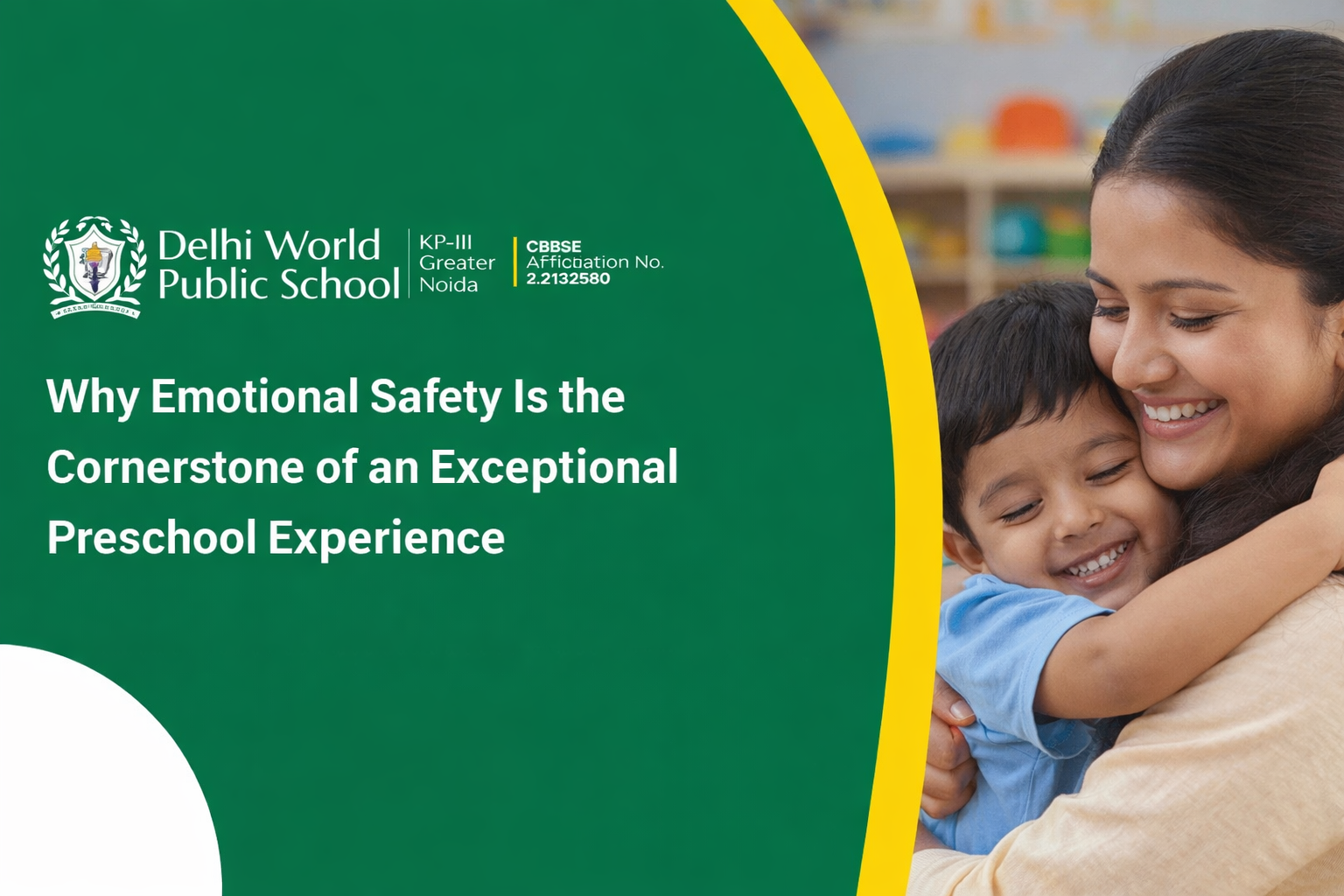
In the earliest years of life, children embark on a journey of discovery — learning not just how to count or recognize shapes, but how to relate to others, regulate emotions, and build confidence in themselves. At Delhi World Public School, the Best Preschool in Greater Noida where the heart of this journey lies emotional safety — an essential foundation that shapes a child’s overall development and future success. In environments where emotional safety is prioritized, children feel secure, valued, and free to explore. This one element can make the difference between an average preschool experience and an exceptional one.
In every discussion about quality early childhood education, emotional safety often proves the differentiating factor between institutions. While robust academic programs and modern infrastructure contribute to a rich learning environment, emotional safety is what truly enables young minds to flourish.
In this article, we explore why emotional safety matters so deeply in early learning, how it impacts children’s development, and what parents should look for when choosing preschool.
About Us:
Our institution believes that emotional safety is the foundation of meaningful early learning experiences. We create nurturing spaces where young learners feel valued, respected, and encouraged to express themselves freely, fostering confidence and curiosity from the very first day. Rooted in a balanced approach to education, our preschool emphasizes play-based learning, guided discovery, and supportive teacher-student relationships that help children thrive. Beyond academics, students participate in dynamic extracurricular activities such as music, art, storytelling, and movement-based play that promote social and emotional skills. Regular events like interactive family days, themed celebrations, and creative showcases provide opportunities for students to share achievements and build strong peer connections. With a strong focus on emotional development and holistic growth, we ensure every child feels secure, engaged, and ready to explore the world with enthusiasm.
Emotional safety goes beyond physical security — it refers to a child’s sense of acceptance, trust, and psychological comfort in their learning environment. A physically safe classroom might prevent falls or injuries, but an emotionally safe environment makes a child feel understood, respected, and free to express themselves without fear of judgment or punishment.
A child who feels emotionally secure:
Emotional safety shapes the emotional brain. When children feel safe, their brains are free to focus on learning and social exploration rather than scanning for threats. This is foundational to all future learning and growth.
For young children, stepping into a preschool setting can be their first extended separation from home. A nurturing environment where they feel emotionally secure gives them the courage to explore, communicate, and take risks in their learning.
When children are confident:
This confidence doesn’t just help in preschool — it lays the groundwork for future academic and personal success.
Emotional regulation is the ability to understand and manage one’s feelings, impulses, and behaviors. Research shows that children who learn to regulate their emotions early:
Emotional safety fosters self-regulation by giving children the space to identify and express emotions, and then learn healthy ways to cope with them. Without a secure emotional base, children may internalize fear or anxiety, impeding their ability to focus and engage effectively.
Children learn to socialize — to share, negotiate, empathize, and cooperate — through daily interactions. In emotionally safe environments:
Strong social skills are predictors of future success, both in school settings and beyond.
A child who fears judgment, embarrassment, or punishment will be less likely to take risks in learning — which is essential at this developmental stage. In contrast, emotional safety:
This calm, secure foundation is essential for any child’s ability to thrive.
Teachers and caregivers play a pivotal role in shaping how children feel in their learning environment. Here are key practices that build emotional safety:
A greeting with a smile, attentive listening, and gentle guidance show children they are seen and valued. Responsive adults help children feel recognized as individuals rather than just part of a group.
Structured routines give children a sense of stability and reduce uncertainty. When kids know what to expect — morning circle time, play stations, snack time — they feel safer and more in control of their world.
Children thrive when adults speak to them with respect. This includes:
Respectful communication nurtures self-worth.
Instead of punishing emotional outbursts, emotionally safe environments help children:
This is emotional coaching, not just discipline.
Teachers skilled in emotional literacy can better recognize subtle cues of discomfort or distress. Such professionals employ strategies that:
This matter of teacher training cannot be overstated.
Children who feel emotionally secure are more engaged, willing to try new things, and better equipped for the challenges of formal schooling. Emotional safety is linked to improved attention, memory, and problem-solving — all critical for academic success.
Early emotional experiences shape the developing brain. When children learn to regulate feelings in nurturing environments, they are more likely to grow into resilient, emotionally healthy individuals.
Preschools that prioritize emotional safety often build stronger partnerships with families. Regular communication, shared insights, and mutual respect create consistency between home and school — a powerful support system for children.
Choosing an early learning environment is one of the most important decisions a parent makes. Beyond facilities and curriculum, here are indicators that a preschool truly values emotional safety:
Observe how teachers interact with children:
Emotional safety begins with warm, respectful adult-child relationships.
The layout of the classroom matters. Emotionally safe spaces allow for:
A child should feel comfortable and able to choose where to engage.
Ask about how emotions are taught — through stories, role-play, guided interactions, or mindfulness activities. Schools that intentionally teach emotional literacy set children up for lifelong skills.
A preschool that values emotional well-being will:
This shows a holistic approach to the child’s emotional world.
Discipline should teach, not punish. Look for:
Children should be guided, not shamed.
True education nurtures the whole child — cognitively, physically, socially, and emotionally. Emotional safety is the thread that connects all these domains. Young learners who feel secure are more receptive to cognitive challenges, more cooperative in social situations, and more confident in physical exploration.
In short, emotional safety is not a “nice-to-have” — it is foundational.
In reality, emotional safety enhances learning capacity. A child who fears failure will not engage meaningfully with academics. Emotional well-being and academic readiness go hand in hand.
While play and joy are vital, children also need intentional emotional guidance. Emotional safety includes teaching empathy, resilience, and self-control — not just comfort.
All children benefit from emotional safety. Even confident kids face challenges — and emotional support helps them grow through these moments.
Children gather to share how they feel, using visual mood charts or emotion cards. This normalizes emotional expression and builds vocabulary around feelings.
Rather than separating children who argue, emotionally safe settings guide them through:
This turns conflict into skill-building.
Children are encouraged to try, not just succeeding. This fosters a growth mindset and resilience.
Play is a child’s language. Through play:
Emotionally safe environments embrace play as a powerful learning tool — not a distraction from academics.
The move from preschool to kindergarten can be stressful for children and parents alike. Children who have experienced emotional safety are better equipped to handle:
These children approach school with curiosity rather than anxiety.
Parents often report:
Teachers witness children who are:
These outcomes stem from environments where emotional safety is woven into daily learning.
While facilities, curriculum, and affiliations matter, emotional safety reflects the heart of early childhood education. It determines:
In the search for the preschool, emotional safety should be at the top of every parent’s checklist.
Emotional safety isn’t a luxury — it’s a necessity. It nurtures resilient, curious, and confident learners. It strengthens social skills and builds a lifelong love for learning. When emotional well-being becomes part of the foundation, every other aspect of education becomes more impactful.
As parents make one of the most important choices for their child’s early years, emotional safety stands as the true cornerstone of an exceptional preschool experience.
FAQs:


