


Delhi World Public School, Greater Noida
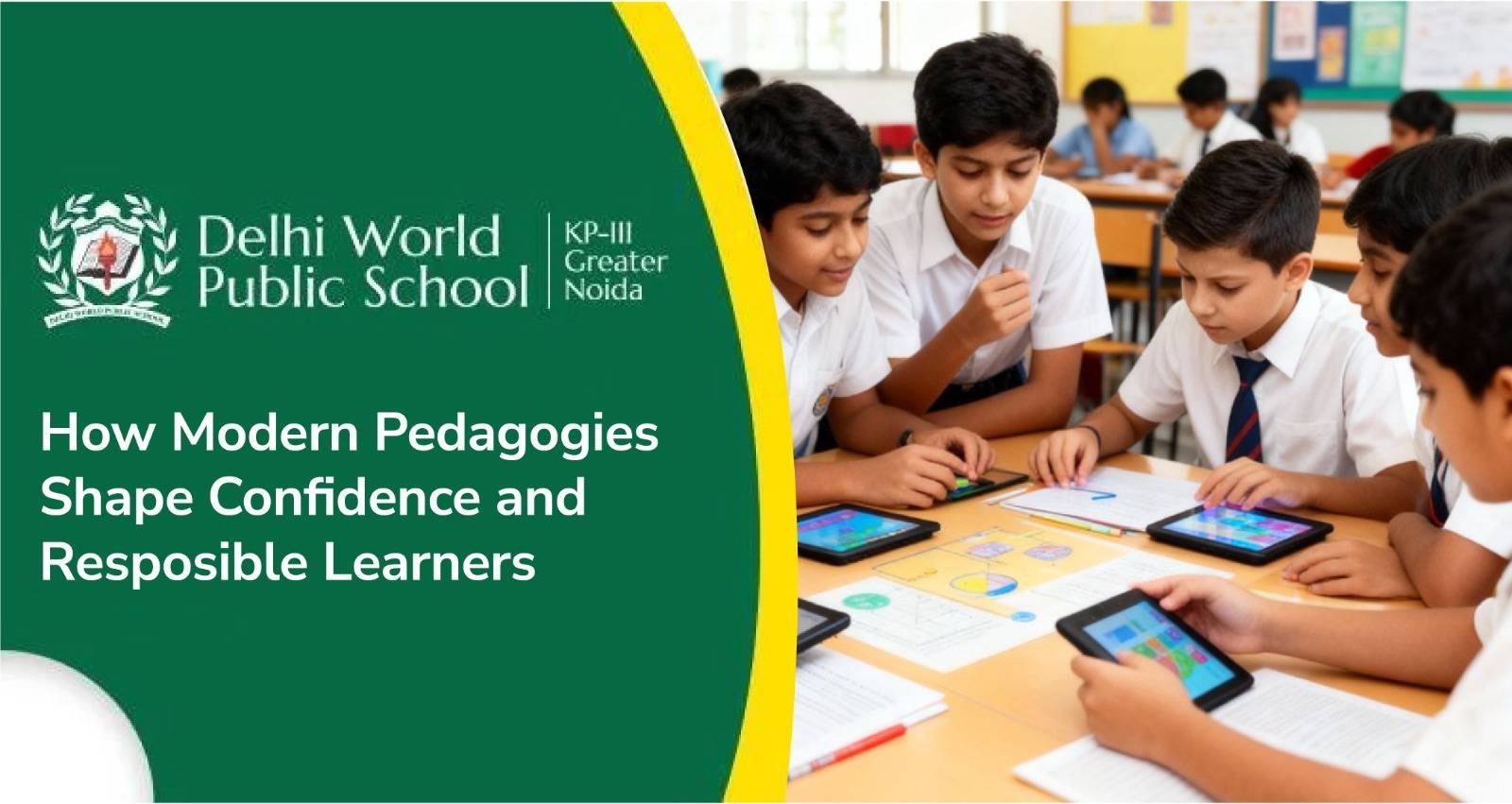
In today’s fast‑evolving world, education can no longer remain simply about passing exams and collecting certificates. What truly matters is the seamless bridging of knowledge, skills and real‑world readiness — equipping learners to navigate complexity, collaborate meaningfully and impact society confidently. At DWPS, the Top Schools in Greater Noida where this article explores how one forward‑looking school in the Delhi‑NCR region is translating this vision into practice, drawing inspiration from what some of the region’s top schools are already doing to ensure that students aren’t just smart — they’re ready.
About Us:
At DWPS Greater Noida, we bridge the gap between theoretical knowledge and real-world readiness by offering a curriculum that emphasizes both academic excellence and skill development. By integrating co-curricular activities, internships, community service, and practical learning experiences, we ensure our students are not only prepared for exams but also for the demands of the world beyond the classroom. Our teachers mentor students through hands-on learning, helping them acquire vital skills such as critical thinking, problem-solving, and collaboration. This holistic approach enables our students to enter the workforce and higher education with a strong foundation in both knowledge and real-world skills.
For decades many schools followed the model: teach content → test mastery → repeat. But the world beyond school no longer rewards mere recall. In the digital age, jobs, citizenship and daily life demand skills — critical thinking, communication, collaboration, adaptability — and the ability to apply what you know to real situations. As many leading schools in the region point out, the definition of “prepared” has changed: it’s less about what you know, more about how you act.
Bridging knowledge, skills and readiness means three things:
When a school commits to all three, it empowers learners not just to survive but to shape the world.
To successfully build this bridge, a school’s entire ecosystem must evolve — curriculum, pedagogy, assessment, infrastructure and culture all need to align. Here are the core pillars:
Rather than siloed subjects, the modern curriculum weaves disciplinary knowledge with skills and real projects. For example, a science lesson isn’t just about formulas — it connects to a community challenge, a technology tool and collaborative presentation. One prominent school states its curriculum is built on “Academic Excellence, Life Skills & Well‑being, Holistic Beyond Academics and Sustainability & Global Citizenship.”
Teaching shifts from “teacher tells, students listen” to “teacher facilitates, students explore”. Inquiry‐based learning, design thinking, project‑based tasks, flipped classrooms, peer teaching — these enable learners to own the process. According to the school website, “activity is at the heart of children’s attempt to make sense of the world around them.”
Traditional exams test what students remember. But future readiness demands assessment of how students use knowledge, how they collaborate, how they reflect and improve. Evolving schools now emphasise portfolios, peer review, self‑reflection, performance tasks and real‑world problem solving.
Innovative schools provide makerspaces, innovation zones, labs, collaborative breakout rooms, digital studios and spaces where students can design, fail, iterate and present. They also integrate technology meaningfully — coding, robotics, VR/AR — to build digital fluency and creative confidence.
A crucial piece is culture: learners must feel safe to take risks, ask questions, work with peers, make mistakes and learn from them. They must develop self‑awareness, ethics, empathy and a sense of responsibility. The leading school states: “True education is not about filling minds — it is about lighting fires of purpose.”
Let’s unpack exactly how learners travel across this bridge.
Before application arises, learners must have strong conceptual grounding. But rather than rote memorisation, the emphasis is on understanding. For example, in mathematics, learners explore not only formulas but why they work; in language learning, comprehension, expression and argument matter more than verb tables.
At the school under discussion, the foundational years use thematic pedagogy and experiential learning so learners develop language, numeracy and thinking alongside exploring the world.
Once knowledge is secure, the next step is to connect it with skills. These include:
Cognitive skills: Critical thinking, analysis, synthesis, problem‑solving.
Schools are embedding these explicitly in their programmes. For example, learners engage in design thinking and computational thinking.
Skills by themselves aren’t enough — they must be applied. Real‑world readiness means students are prepared to step into novel situations, unstructured challenges, unfamiliar contexts and bring both competence and confidence. This includes:
Leading schools are already enabling this readiness: providing vocational studies, global exposure, community connect initiatives and digital‑self‑learning modules.
What does this look like in the day‑to‑day life of a learner in the school? Below are practical snapshots.
A Kindergartener explores numbers via a local vegetable‑market simulation — buying/selling, making change and then reflecting on “how did I decide how much to change?”
A collaborative project: students design and prototype a ‘community‑garden’ using composting and smart sensors — integrating science (ecosystems), maths (data‑collection), design thinking (prototype), language (report & presentation), citizenship (sustainability).
Flipped‑classroom model: learners watch an interactive video at home, come to class to solve real‑world problem statements in teams, with teacher as facilitator.
Vocational and skill‑subjects: students may choose ‘Design Thinking’, ‘Entrepreneurship’, ‘Robotics & AI’, ‘Media & Communication’ alongside core academics.
By carefully building the bridge from knowledge to readiness, learners gain much more than test outcomes:
Collectively, this makes learners ready for more than the next exam — they’re ready for the next chapter of life.
For families evaluating schools today, the question is: “Will this school prepare my child not just for class XII or the board exam, but for the world that comes after?” The answer lies in how well the school is bridging knowledge, skills and readiness.
Here are the elements to look for (which our example school implements):
Finding a school that delivers on all these makes a crucial difference in your child’s journey from learner to leader.
Implementing this bridging model isn’t a one‑time shift — it’s continuous evolution. Schools must keep adapting because the world keeps changing. Some key future trends to watch (and integrate) include:
The school under discussion has already aligned many of its systems with these directions — this ensures students today are ready for tomorrow.
In a world where knowledge is abundant, the differentiator is how you apply what you know, how you collaborate, how you adapt, how you innovate. By bridging knowledge, skills and real‑world readiness, schools transform education from preparation for the board exam to preparation for life.
The school highlighted in this article is a vivid example of how this can be done: a school where every classroom, every project, every teacher and every student question is oriented toward meaningful learning, and where readiness for the world beyond school is treated as integral, not optional.
For parents and students seeking more than just academic success, for learners who want to grow not just in marks but in maturity, capability and purpose — choosing an education that bridges knowledge‑skills‑readiness is the choice that matters.
Choosing a school today isn't just about the pass rate or campus size. It’s about how the school designs the journey from classroom to career, from content to confidence, from knowledge to societal impact. At DWPS, the Top Schools in Greater Noida where the model of bridging knowledge, skills and readiness offers a robust roadmap — and the institution we’ve explored stands as a testimony to that vision in action.
In the quest for education that empowers, not just equips — the real measure is not what students learn, but what they become. And when a school fosters learners who are curious, resilient, collaborative, ethical and ready for the world — that’s when education truly fulfils its promise.
FAQs:
6. Why is a conceptual learning framework important for future success?
A conceptual learning framework helps students understand how to apply their knowledge effectively, enhancing their adaptability and problem-solving abilities


